

To help pet parents better understand their companions’ needs, PetSafe established National Pet Hydration Awareness Month. This event takes place each July and aims to educate pet owners about how crucial it is to ensure their dogs and cats drink plenty of water during the summer and throughout the year. As veterinarians, we see far too many cases of dog and cat dehydration every summer and would like to help you prevent your furry family member from experiencing this all-too-common problem. In this blog, we’re embracing the value of Pet Hydration Awareness Month and sharing how you prevent cat and dog dehydration, get your pet to drink more water, and other ways you can keep your pet well-hydrated and healthy.
Why You Need to Know All About Pet Hydration
What Is Dehydration in Dogs and Cats?
Symptoms of Dehydration in Pets
The symptoms of dehydration are similar for both dogs and cats. They even share some symptoms with humans. Recognizing the signs and seeking veterinary care right away could save your pet’s life, so we strongly recommend familiarizing yourself with them.
Symptoms of Dehydration in Pets
- Lethargy
- Reduced energy
- Loss of appetite
- Heavy panting
- Dry gums and nose
- Sunken eyes
- Decreased skin elasticity (skin tenting)
- Vomiting
- Constipation or very hard stools
In cats, insufficient water intake can also cause urinary blockages, which can be fatal when not treated immediately.
The symptoms of feline urinary blockages include:
- Howling/crying
- Straining in the litter box and producing little to no urine
- Litter box avoidance
- Hiding
- Excessive grooming or licking of the genitals or the area below the base of the tail
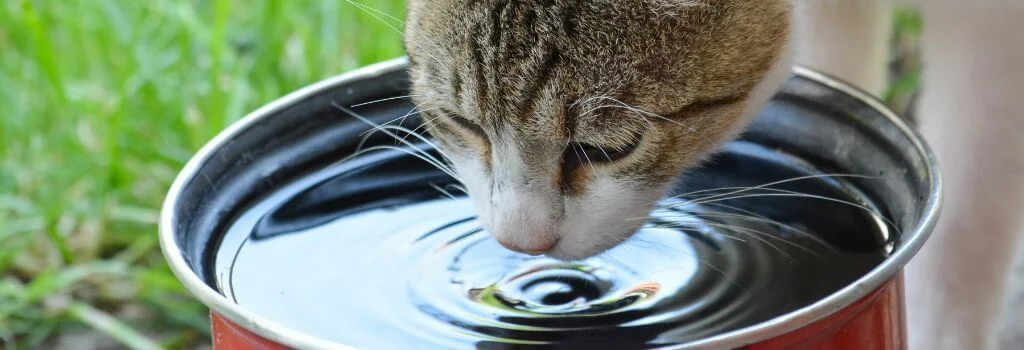
Keeping Your Pet Well-Hydrated
Provide 'Round-the-Clock Access to Water
Switch to Wet Food
Move the Water Bowl If Your Pet Isn't Drinking
Animals — especially cats — are often finicky about the location of their water bowl. They may refuse to drink if you place it too close to their litter box, food, or a noisy appliance such as a washing machine. Some dogs instinctively refuse water when the bowl is in the wrong place, too. If your pet doesn’t seem interested in their water bowl, move it to a clean area away from food dishes and litter boxes. Make sure it’s in a convenient location to allow easy access.
Try a Different Bowl Type
Limit Exercise and Outside Time on Hot Days

What to Do When Your Cat or Dog Isn’t Drinking
Immediate Actions for Dehydrated Pets
- 1. Offer water: Provide fresh, cool water immediately.
- 2. Electrolyte solutions: Consider offering an electrolyte solution designed for pets. Consult your vet for recommendations.
- 3. Moist food: Feed them wet food or add water to their dry food.
- 4. Monitor: Keep a close eye on their behavior and water intake.
When Dehydrated Pets Should See a Veterinarian
How Veterinarians Address Pet Dehydration
Dehydration Diagnosis
- Physical examination: The vet will check for signs of dehydration, such as dry gums, sunken eyes, and skin tenting, like we mentioned above.
- Vital signs: Monitoring heart rate, respiratory rate, and temperature can indicate the extent of dehydration.
- Blood tests: These can reveal electrolyte imbalances and assess kidney function, which can be affected by dehydration.
- Urinalysis: This test helps evaluate kidney performance and hydration levels by examining urine concentration.
Dehydration Treatment
- 1. Oral Rehydration Solutions
- 1. Mild dehydration: For pets with mild dehydration and the ability to drink, vets may provide oral rehydration solutions. These solutions are specially formulated with electrolytes to restore balance quickly.
- 2. Subcutaneous Fluids
- 1. Moderate dehydration: If your pet is moderately dehydrated but still relatively stable, the vet might administer subcutaneous fluids. This involves injecting fluids just under the skin, allowing for gradual absorption.
- 3.Intravenous Fluids (IV)
- 1. Severe dehydration: In cases of severe dehydration, intravenous fluids are necessary. This method provides rapid rehydration by delivering fluids directly into the bloodstream. It allows for precise control over the volume and composition of fluids administered.
- 2. Hospitalization: Severely dehydrated pets may require hospitalization for continuous IV fluid therapy, monitoring, and supportive care.