For most cat owners, the temperatures outside aren’t often a cause for concern – after all, most cats spend all of their time inside and are rarely exposed to the elements. But for those owners who have cats that like to spend some time outdoors or take care of strays that live fully outside, the heat in the spring and summer months brings concerns that absolutely should not be overlooked.
Much like dogs, cats are vulnerable to heat-related issues such as dehydration, heat exhaustion, and paw pad burns. If your cat spends any part of the day outdoors — whether by choice or circumstance — it’s essential to understand how heat can affect them and what steps you can take to keep them safe and cool.
Do Cats Get Hot?
While we might like to think of cats as perpetually cool and aloof creatures, they, too, can feel the effects of heat and rising temperatures. Cats, like many other animals, can get hot and face the risks of heat exhaustion and heatstroke, especially in warm weather or when left in poorly ventilated or uncooled spaces.
Can Cats Overheat?
Absolutely. While cats may be a little more heat-tolerant than other animals, like rabbits or smaller rodents, their ability to regulate their temperature and cool themself down is still limited, leaving them vulnerable to the effects of heat-related illnesses.
Signs of overheating in cats include panting, drooling, lethargy, rapid heartbeat, vomiting, or collapse. If you suspect your cat is overheating, it’s important to move them to a cool area immediately, help them cool off gradually, offer them water, and contact your veterinarian. Overheating in cats should always be taken seriously as it can lead to numerous negative health consequences, including:
How Hot Is Too Hot for Cats?
When talking about how hot is too hot for cats, it’s important to discuss two different types of temperatures – body temperature and environmental temperatures – and what they mean for a cat’s health and well-being.
Let’s start with body temperature. A cat’s normal body temperature can range from 100.4° to 102.5° Fahrenheit. Any temperature value in this range is considered healthy and shouldn’t be a cause for concern. However, once a cat’s body temperature starts to rise beyond 102.5° Fahrenheit, the problems begin. Anything higher than 103.5° is considered hyperthermia and may indicate heat exhaustion or heatstroke – conditions that can be deadly and cat owners certainly don’t want to mess around with.
Now, let’s talk about environmental temperatures and what the temperature outside needs to be in order to significantly raise a cat’s body temperature. Veterinarians and animal health experts have found that environmental temperatures above 100° Fahrenheit are too hot for all kinds of cats and are considered dangerous.
When cats are exposed to these high temperatures, especially for extended periods of time, their body temperatures can not only rise to unsafe temperatures, but they can also sustain other injuries, including burns to their paw pads from walking on hot surfaces like asphalt, concrete, or metal. Even if the air temperature is only around 90–100°, these surfaces can become dangerous, reaching temperatures of 125° or higher, depending on the conditions.
Because high temperatures can quickly become dangerous for cats, we highly recommend bringing your cat indoors or to a shaded or covered area when warmer weather is expected. Cats should also never be left in hot cars for any period of time, as a locked vehicle on a warm day can quickly reach dangerous temperatures that can harm or even kill a cat.
Can Cats Sweat?
Yes, but the explanation isn’t as straightforward as you’d think. While cats physically can sweat, they don’t do so in the same way humans do. As humans, we have specialized glands in our skin that secrete sweat in order to help us regulate our body temperature. As we sweat, and then it evaporates from the surface of our skin, the body cools itself, thus working to prevent overheating. Humans will sweat as much as they need to to keep their body temperature from rising too much, which you’re likely familiar with if you ever spent time outside on a hot day or engaged in rigorous exercise or physical activity.
Cats, on the other hand, have limited sweat glands across their bodies and will sweat far less than humans. A cat’s sweat glands are found in the paw pads and around the lips, chin, and anus. The majority of a cat’s sweat is produced by the sweat glands in their paw pads, so the only noticeable sweat you may see from a cat is a damp paw print left behind if they are particularly warm or even stressed.
How Do Cats Cool Down?
Since cats can’t completely rely on sweating to cool themselves down, there are a number of things they may do to beat the heat, including:
Cats, on the other hand, have limited sweat glands across their bodies and will sweat far less than humans. A cat’s sweat glands are found in the paw pads and around the lips, chin, and anus. The majority of a cat’s sweat is produced by the sweat glands in their paw pads, so the only noticeable sweat you may see from a cat is a damp paw print left behind if they are particularly warm or even stressed.
What Temperature Is Too Hot for Cats Indoors?
Temperature preferences for indoor cats can be a little bit of a touchy subject, because homes and housing environments for cats are typically cooler than they’d prefer. The reality for many indoor cats is that their owner’s thermoneutral zone – the temperature range where the body can maintain its temperature without needing to expend extra energy to stay warm or cool off – will take precedence when setting a temperature for the house. A human’s thermoneutral zone is much lower than that of a cat’s, making our preference for home temperatures much lower than the range a cat would need to maintain their body temperature without any extra energy expenditure. So, cat owners are more likely to need to give their cat extra chances to warm up, rather than cool down.
However, despite a cat’s thermoneutral zone being higher, in some circumstances, indoor temperatures can become uncomfortable or even dangerous for some cats, especially if ventilation is poor, there’s a lack of cool surfaces, or if the cat is dehydrated or doesn’t have access to enough water.
However, it’s important to take a cat’s health and age into account when determining what temperature is too hot for them while indoors. Kittens, senior cats, and cats that are overweight or have existing health issues may be more sensitive to heat and, therefore, more susceptible to overheating. Remember, every cat is different, so if your AC is on the fritz or it’s unseasonably warm in your house, be sure to watch your cat closely for any signs of discomfort or overheating and don’t always go by the number on the thermostat.
How to Keep Your Cat Cool When the Temperatures Start to Rise
If your area is getting hotter by the day and you’ve found yourself searching online for things like “how to cool down cat in summer,” don’t worry, we’ve got you.
Hydration is one of the most important aspects of keeping cats from overheating during hot summer days. Cats can be less inclined to drink water on their own than their canine counterparts, and many cats are often mildly dehydrated, making them more susceptible to feeling the effects of extreme heat. Cats who primarily eat dry food or suffer from illness like chronic kidney disease or diabetes are at a greater risk for dehydration and should have their water intake monitored to ensure they’re getting enough fluids.
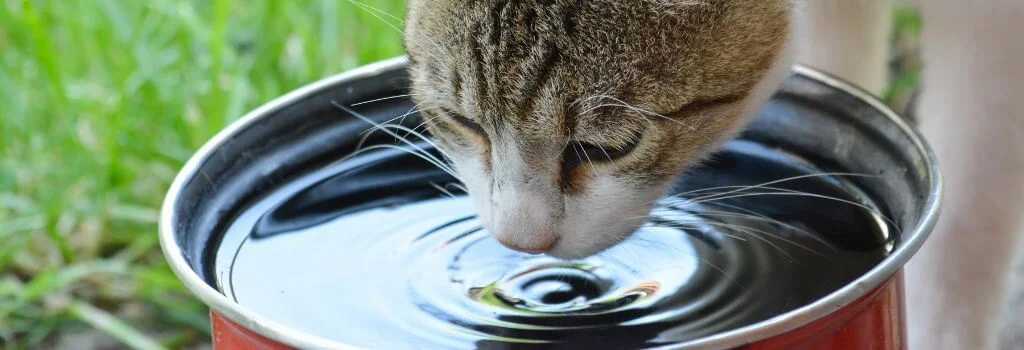
Cats should always have unrestricted access to clean, fresh water, no matter what the weather is like. Place multiple bowls or water sources around your home or yard to encourage drinking, but be sure to monitor any bowls outside – you wouldn’t want any bugs or critters getting into your cat’s clean water! On particularly hot days, you can try giving them frozen treats to lick or a bowl of ice cubes to play with as an extra incentive to get a healthy intake of water.
You can also help your cat stay cool by offering cool surfaces to rest on, like tile floors, or using a chilled pet mat or damp towel in their favorite lounging spot. We all know that cats can spend hours lounging, so using these tricks to make their preferred place of relaxation just a little cooler can go a long way in preventing overheating.